
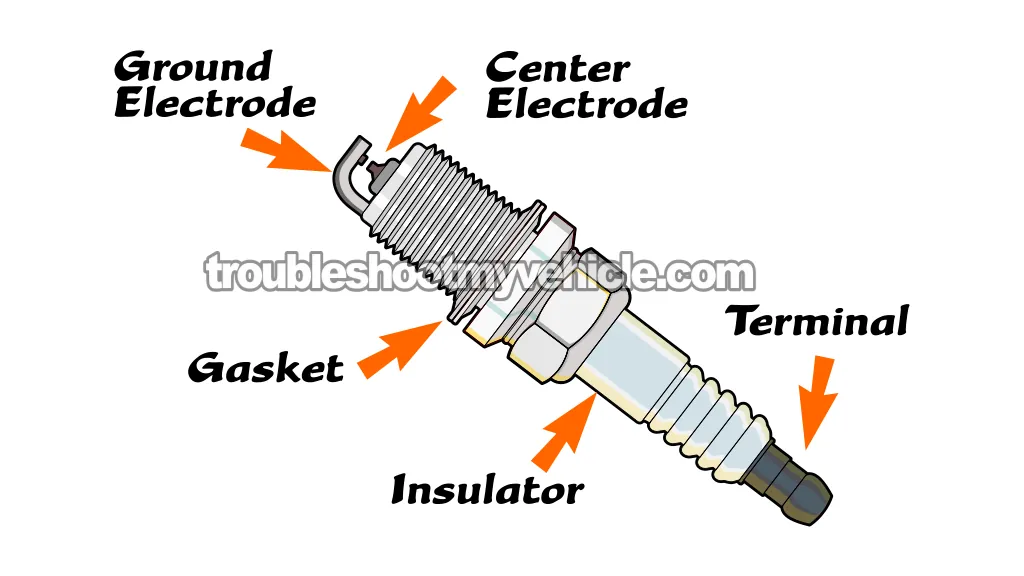
The spark plug may be one of the smallest parts on your engine, but it's one of the hardest-working. Every time your engine runs, each spark plug has to ignite the air/fuel mixture in its cylinder thousands of times every minute.
In this tutorial, I'm going to explain the most common ways spark plugs fail, whether from normal wear, carbon buildup, or engine oil fouling.
I'll also show you how to recognize when it's time to replace them and, more importantly, which spark plugs work best if the 3.1L V6 Buick Century is burning oil.
Contents of this tutorial:
ES  You can find this tutorial in Spanish here: Las Causas Más Comunes De La Falla De Las Bujías (1994-2005 3.1L V6 Buick Century) (at: autotecnico-online.com).
APPLIES TO: This tutorial applies to the following vehicles:
- 3.1L V6 Buick Century: 1994, 1995, 1996, 1997, 1998, 1999, 2000, 2001, 2002, 2003, 2004, 2005.
CYLINDER MISFIRE DIAGNOSTICS: Troubleshooting a cylinder misfire? Check out this comprehensive guide on cylinder misfire diagnostics:
Why Spark Plugs Fail On High-Mileage Engines
Spark plugs don't last forever. Every time a spark jumps across the gap between the center electrode and the ground electrode, a tiny amount of metal is worn away. It may not seem like much, but after thousands of miles, that wear eventually affects the spark plug's ability to fire efficiently.
How long a spark plug lasts depends on the type that's installed. Here's a general idea of what you can expect:
- Copper spark plugs: Usually provide about 50,000 to 60,000 miles of reliable service.
- Platinum spark plugs: Can often last close to 100,000 miles under normal operating conditions.
Those mileage figures assume your 3.1L V6 engine is in good mechanical condition and isn't burning engine oil.
If your Buick Century's engine is using oil, don't expect the spark plugs to last anywhere near their normal service life. As the oil burns inside the cylinders, it leaves carbon deposits on the spark plugs. Over time, those deposits build up around the electrodes and interfere with the spark, causing the affected cylinder to misfire.
When that happens, you'll usually notice a rough idle, reduced engine performance, and poor fuel economy.
If your Buick Century is OBD II-equipped (1996-2005), the PCM will usually detect the misfire and turn on the check engine light. In most cases, you'll find a cylinder-specific misfire trouble code, such as P0301, P0302, P0303, P0304, P0305, or P0306, depending on which cylinder is misfiring.
When Should I Replace The Spark Plugs?
Knowing when to replace the spark plugs on your 1994-2005 3.1L Buick Century depends on one important question:
Is the engine burning oil, or isn't it?
If the engine isn't burning oil, then replacing the spark plugs is easy. Just follow the factory replacement interval recommended in the owner's manual or repair manual.
If the engine is burning oil, things change. As the oil burns inside the cylinders, it leaves carbon deposits on the spark plugs. Those deposits eventually interfere with the spark and cause the engine to develop a rough idle or cylinder misfire long before the plugs reach the end of their normal service life.
If your 3.1L V6 is burning oil, here are the signs that it's time to install a fresh set of spark plugs:
- The engine suddenly develops a rough idle or starts to misfire.
- The check engine light comes on with a cylinder misfire trouble code.
Not sure if your engine is burning oil? Here are a few common signs:
- You have to add engine oil between oil changes.
- You notice blue smoke coming from the tailpipe while accelerating.
- You see blue smoke from the exhaust when you first start the engine, especially after it's been sitting overnight.
If your Buick Century's 3.1L V6 isn't burning oil, you can expect the spark plugs to reach their normal service life. As a general rule, here's when they should be replaced:
- Copper spark plugs (OEM type): About every 50,000 to 60,000 miles.
- Platinum spark plugs: Up to about 100,000 miles under normal operating conditions.
Which Spark Plugs Should I Buy: AC Delco Or Brand X?
The original spark plugs installed at the factory on your 3.1L V6 Buick Century were ACDelco copper spark plugs. Replacing them with ACDelco plugs is always a good choice, but they're certainly not your only option.
Quality spark plugs from brands like NGK, Autolite, Bosch, and other reputable manufacturers will work just as well. The real question isn't so much which brand to buy—it's what condition your engine is in.
If your engine is burning oil, the spark plugs are eventually going to become carbon fouled no matter which brand or type you install. That means spending extra money on platinum or iridium spark plugs really isn't going to buy you anything.
On the other hand, if your engine isn't burning oil, then premium spark plugs are worth considering because they'll typically last much longer than standard copper plugs.
Here's the rule of thumb I follow:
- The engine is burning oil: Save your money and install a basic set of copper spark plugs. They'll eventually become oil-fouled just like platinum or iridium plugs, so there's no advantage to paying more.
- The engine isn't burning oil: Feel free to stick with OEM-style copper spark plugs or upgrade to platinum plugs for their longer service life. Either choice will work well.
Other Things That Can Kill A Spark Plug
Normal wear and carbon fouling aren't the only reasons a spark plug stops firing. In many cases, the spark plug itself isn't even the problem. Instead, another engine or ignition system issue is causing the plug to stop doing its job.
When that happens, the end result is usually the same: the affected cylinder misfires, the engine runs rough, and the check engine light may come on.
Here are the most common things that can cause this to happen:
- A fuel injector that's leaking or stuck open can flood the cylinder with fuel and foul the spark plug.
- A damaged or worn spark plug wire can prevent the spark from reaching the plug.
- A failed ignition coil can stop supplying spark to one or two cylinders.
- Low engine compression can cause incomplete combustion, which eventually fouls the spark plug.
- An engine that's burning oil can quickly coat the spark plug with carbon deposits, causing it to misfire.
It's also possible to damage a brand-new spark plug during installation. Here are the most common installation mistakes:
- Over-tightening the spark plug and cracking the porcelain insulator.
- Dropping the spark plug before installing it.
- Accidentally closing or changing the spark plug gap while handling it.
- Installing the spark plug without verifying that the gap matches the specification for your engine.
- Spraying a hot engine with water, which can rapidly cool and crack the porcelain insulator.
REAL-WORLD CASE STUDIES:
Having spent what seems like a lifetime diagnosing and wrenching on cars, I've run into plenty of misfire issues caused by simple installation mistakes —and, of course, quite a few caused by low compression and spark plugs covered in carbon tracks. I've written down some of those experiences, and you can read those real-life case studies here:
- Diagnosing A Toyota Corolla Misfire Case Study —a misfire caused by a simple installation error.
- Troubleshooting A Hard To Diagnose Misfire Case Study (GM 3.1L, 3.4L) —this one involved low compression causing a stubborn cylinder misfire (it was my brother-in-law's car, too).
- Carbon Tracks Are A Common Cause Of Ignition Misfires —spark plug and spark plug wire boot with carbon tracks causing a cylinder misfire (at: easyautodiagnostics.com).
More 3.1L V6 Buick Century Diagnostic Tutorials
You can find a complete list of diagnostics tutorials for your 3.1L V6 Buick Century in this index:
Here's a small sample of the tutorials you'll find:
- How To Test The 24X Crankshaft Position Sensor (1994-2005 3.1L V6 Buick Century)..
- How To Test The TPS With A Multimeter (1997-2005 3.1L V6 Buick Century).
- How To Test For A Blown Head Gasket (1994-2005 3.1L V6 Buick Century).
- How To Test Engine Compression (1994-2005 3.1L V6 Buick Century).

If this info saved the day, buy me a beer!
