
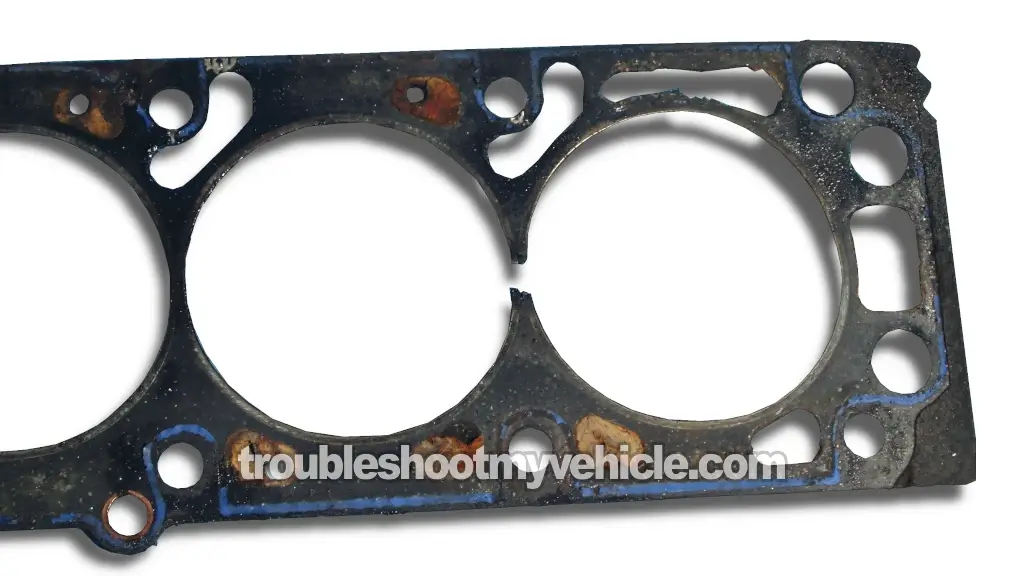
In this tutorial, I'm going to explain the four tests you can do to find out if your 2.2L Buick Century has a blown head gasket or not.
The cool thing is that two of these tests don't require any tools whatsoever, and you can get them done in under five minutes.
The other two are a compression test, which requires a compression tester, and a block test, which is done with a combustion leak detector.
All four tests are explained in detail, so you can quickly and easily figure out if your Buick Century's 2.2L four-cylinder engine has a blown head gasket or not.
Contents of this tutorial:
APPLIES TO: This tutorial applies to the following vehicles:
- 2.2L Buick Century: 1993, 1994, 1995, 1996.
Symptoms Of A Blown Head Gasket
Blown head gaskets usually cause one of two problems:
- The engine won't start.
- The engine starts and runs, but overheats within a few minutes for no apparent reason.
So, if your 2.2L Buick Century has overheated, and you're seeing one or more of the following symptoms, you can suspect that it has a blown head gasket:
- The engine overheats for no apparent reason, even though the cooling system components (such as the radiator fan, water pump, thermostat, etc.) are working properly.
- Thick white smoke comes out of the tailpipe and has the sweet smell of burning coolant.
- The engine cranks but won't start.
- The engine oil has a milky, light-brown or whitish color because it's mixed with coolant.
TEST 1: Engine Oil The Color Of Coffee With Too Much Creamer
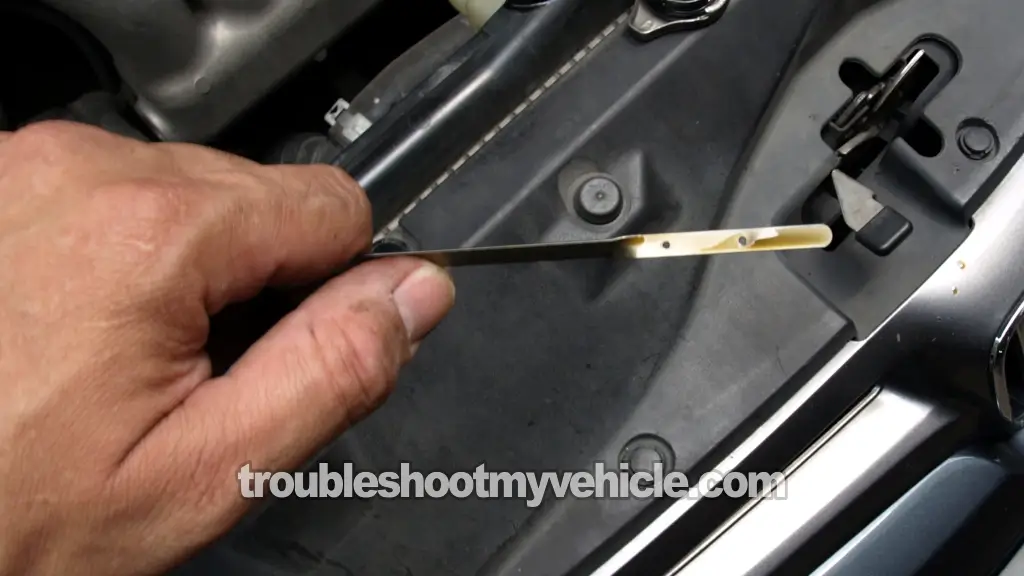
One of the very first things we need to check, if we suspect a blown head gasket, is the condition of the engine oil.
The reason is simple: one of the most common results of a blown head gasket is coolant leaking into the crankcase, where it mixes with the engine oil.
When that happens, the oil turns a milky-white color. The best way I can describe it is that it looks like coffee with way too much creamer.
So, we'll start by pulling out the dipstick and taking a close look at the oil. Here's what you're looking for:
- If the oil has a milky, coffee-with-too-much-creamer color, then coolant has mixed with the engine oil, which confirms you've got a blown head gasket.
- If the oil still has its normal color and consistency, we'll move on to the next test.
Alright, here's what we need to do:
- 1
Open the hood.
- 2
Pull out the engine oil dipstick.
- 3
Check the color of the oil sticking to the engine oil dipstick.
- 4
You'll see one of two results:
1.) The engine oil looks like coffee with too much creamer.
2.) The engine oil is its usual normal color.
Alright, let's analyze your test result:
CASE 1: The engine oil is milky-white in color (coffee with too much creamer). This test result confirms that the head gasket is blown on your 2.2L Buick Century.
CASE 2: The color of the engine oil is normal. This is the correct and expected test result, and it lets us know that the head gasket isn't allowing coolant into the crankcase.
The next test is to see if the engine's compression pressures are escaping into the engine's cooling system (radiator). For this test go to: TEST 2: Coolant Shooting Out From Open Radiator.
TEST 2: Coolant Shooting Out From Open Radiator
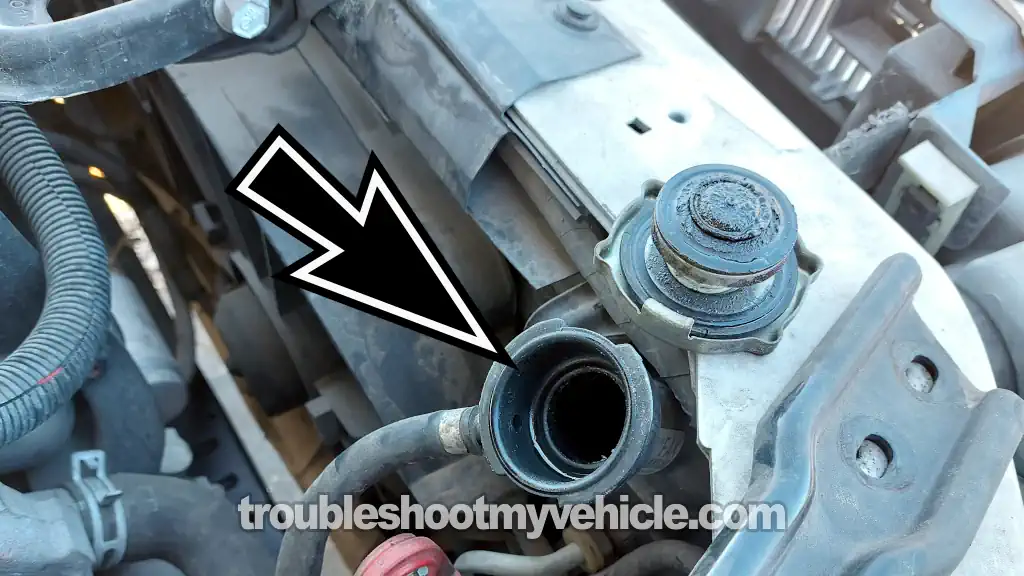
The second thing we need to check, right after making sure the oil doesn't have a milky-white color, is whether combustion pressure is leaking into the engine's cooling system.
We can easily confirm this by cranking the engine with the radiator cap removed. If you do have a blown head gasket on your hands, the coolant is going to be pushed out of the radiator by combustion gases entering the cooling system through the failed head gasket.
Now, if the coolant stays undisturbed in the radiator while the engine is being cranked, this confirms that the head gasket isn't allowing combustion pressure into the cooling system, and we can move on to the next test.
IMPORTANT: Never remove the radiator cap if the engine is hot or even warm. Always let the engine cool down completely before removing the cap. Otherwise, hot coolant can spray out under pressure and cause serious burns.
Let's get started:
- 1
Remove the radiator cap from the radiator.
Check the coolant level and if necessary add some water or coolant. - 2
Have your helper crank the engine while you stand at a safe distance from the open radiator.
- 3
You'll see one of two results:
1.) The water or coolant inside the radiator will shoot out.
2.) The coolant remained undisturbed. In other words, cranking the engine will have no effect on the level of the water or coolant in the radiator.
Let's examine your test result:
CASE 1: The coolant shot out from the open radiator as you cranked the engine. This confirms that you've got a blown head gasket on your 2.2L Buick Century.
CASE 2: The coolant DID NOT shoot out from the open radiator. This is the correct and expected test result.
Our next step depends on what the engine is doing. Choose the option that best matches your Buick Century's symptom:
- The engine does not start. Your next step is to perform an engine compression test. Head over to: TEST 3: Engine Compression Test.
- The engine starts and runs, but overheats within a few minutes for no apparent reason. If this matches your situation, head over to: TEST 4: Using A Chemical Block Tester (Combustion Leak Tester).
TEST 3: Engine Compression Test
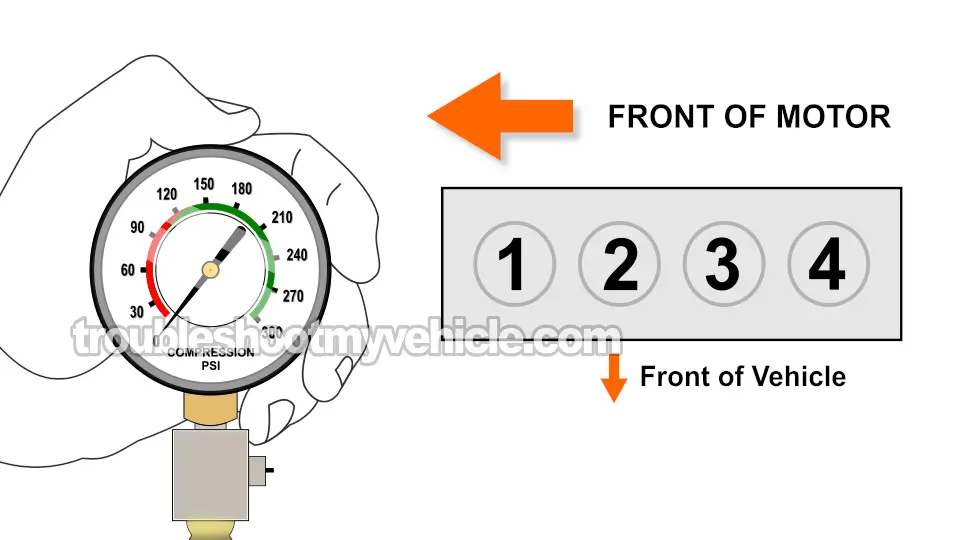
If the 2.2L four-cylinder engine in your Buick Century overheated and now it doesn't start, there's a good chance the head gasket has failed between two cylinders.
When this happens, the compression from one cylinder escapes into the other, and vice versa, as you're cranking the engine. The end result is that the engine is left with only two working cylinders, and it's never going to start with just those two.
The easiest way to find out if this is what happened to your 2.2L Buick Century is to perform a compression test on all four cylinders. The compression test results will quickly tell you if you've got two side-by-side dead cylinders.
NOTE: You can find the engine compression test explained in more detail and how to interpret its test results in this tutorial: How To Test Engine Compression (1994-2005 2.2L Buick Century).
These are the test steps:
- 1
Disable the ignition system by disconnecting the ignition coil pack from its engine wiring harness connectors.
- 2
Remove all of the spark plugs.
- 3
Install the compression tester by hand in the spark plug hole of cylinder #1.
Do not use any tools to tighten the compression tester. Hand tightening the compression tester is more than enough to get the proper results. - 4
Have your helper crank the engine.
The needle on the tester will climb as the engine cranks. Once the cylinder reaches its maximum compression the needle will stop climbing.
Once it stops climbing have your helper stop cranking the engine. - 5
Write down the reading and what cylinder it belongs to (you can use the illustration above to help you identify the cylinder).
- 6
Repeat steps 3 through 5 in the remaining cylinders.
Let's take a look at what your test results mean:
CASE 1: Every cylinder produced a compression reading above 0 PSI. This is the normal test result and tells you that the head gaskets are not leaking compression between any two neighboring cylinders.
Your next step is to perform a chemical block test with a combustion leak tester. Go to: TEST 4: Using A Chemical Block Tester (Combustion Leak Tester).
CASE 2: Two neighboring cylinders had 0 PSI compression. This confirms that the head gasket has failed between those two cylinders, allowing compression to leak from one cylinder into the other.
TEST 4: Using A Chemical Block Tester (Combustion Leak Tester)
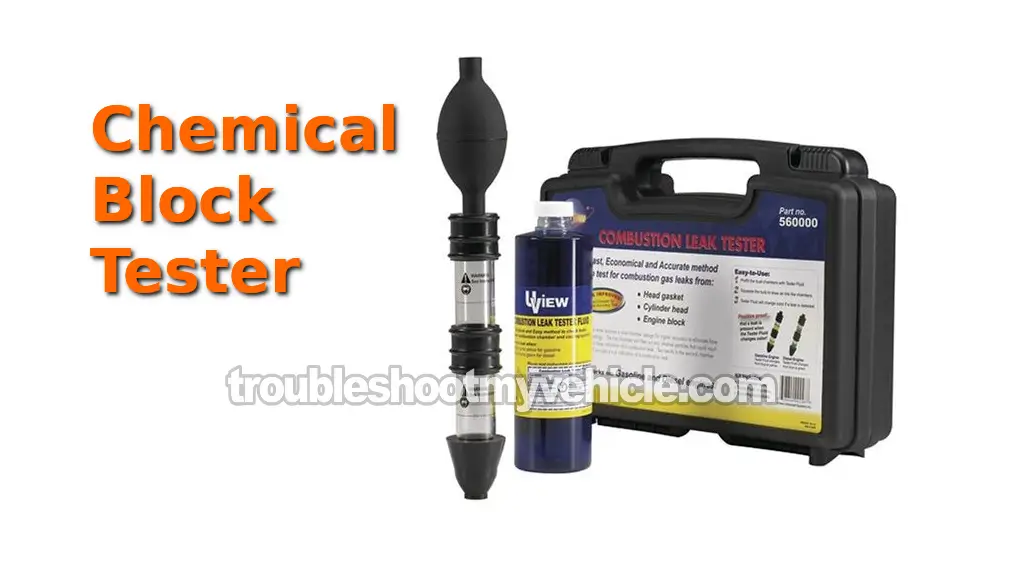
A blown head gasket doesn't always fail in a dramatic way. In its early stages of failure, it won't trigger any of the symptoms that the previous three tests are designed to detect.
What does that mean? It means you won't find coolant mixed with the engine oil. You won't see combustion gases forcing coolant out of the radiator. And all four cylinders will still have good compression.
Even so, the engine will overheat within a few minutes of being started, and there won't seem to be any obvious reason why.
When you're dealing with this type of head gasket failure, the only reliable way to confirm it is by performing a block test with a combustion leak tester.
It's the same test a professional repair shop will use to verify a blown head gasket, and it's something you can easily do yourself.
A block test simply involves using a chemical combustion leak detector tool that checks to see if combustion gases are leaking into the engine cooling system.
In a nutshell, this is how a block tester works:
- A blue liquid chemical, which is blue in color, is placed in the tester (see photo above).
- The engine is started.
- The tester assembly is then placed on the open radiator neck (you may have to drain some of the coolant in the radiator since this tool needs to 'gulp' some of the air inside the radiator).
- The rubber bellow is then squeezed to suck in the air up through the two fluid-filled chambers. As the air bubbles up through the fluid, it will cause a chemical reaction.
- If the blue chemical turns yellow (for gasoline engines), then combustion gases are entering the radiator. This confirms a blown head gasket, a cracked block, or a cracked cylinder head issue.
- If the blue chemical doesn't change color, then you can conclude that you don't a blown head gasket, a cracked block, or a cracked cylinder head issue.
Where can you get the chemical and block tester? At your local auto parts store or here:


 20%
20%Disclosure: As an Amazon Associate, I earn from qualifying purchases. If my tutorials help you, using these links is an easy way to support the site at no extra cost to you. Thank you!
More 2.2L Buick Century Diagnostic Tutorials
You can find a complete list of diagnostics tutorials and wiring diagrams for your 2.2L Buick Century in this index:
Here's a small sample of the tutorials you'll find:
- Common Causes Of Spark Plug Failure (1993-1996 2.2L Buick Century).
- How To Test Engine Compression (1993-1996 2.2L Buick Century).
- How To Test The TPS With A Multimeter (1993-1996 2.2L Buick Century).
- How To Test The MAP Sensor (1993-1996 2.2L Buick Century).

If this info saved the day, buy me a beer!
